Our schools’ poetry competition is open until 31st July 2025 for pupil poets from key stages 2 and 3 and 4 – 5 (combined).
This year’s theme is: life by the sea.
Below are some poems and images to inspire you. Pick a beginning that catches your attention and click on the word ‘more’ to read the whole poem.
How well do any of these poems catch the ideas in our theme – making you see, hear, smell and feel the presence, actions and moods of the sea, or the wonders and struggles of the creatures that live in and around it, or the people who spend their time out at sea, working for a living or pursuing an activity they love in order to get away from it all?
What connects with your experiences of the sea?
Is there anything you’ve noticed that isn’t really captured in these poems? (Go to the bottom of this page for some more ideas…)
‘Crossing the bar’ by Alfred Lord Tennyson (the sea as a metaphor for something else)
Sunset and evening star,
And one clear call for me!
And may there be no moaning of the bar,
When I put out to sea… more
‘Sea Marge’ by Ivor Gurney (short vivid description of the sea at one moment in time)
Pebbles are beneath, but we stand softly
On them, as on sand, and watch the lacy edge
Of the swift sea… more
‘A storm at sea’ riddle by an unknown 10th century poet (a storm at sea describes itself – personification)
Sometimes I plunge through the press of waves
unexpectedly, delving to the earth,
the ocean bed. The waters ferment… more
‘Sea fever’ by John Masefield (a hymn of devotion to the adventure of the sea)
I must go down to the seas again, to the lonely sea and the sky,
And all I ask is a tall ship and a star to steer her by;
And the wheel’s kick and the wind’s song and the white sail’s shaking… more
‘Over my toes’ by Michael Rosen (simple language and form recreates sounds and patterns)
Over my toes
goes
the soft sea wash… more
You’ll find more in the children’s poetry archive including The Albatross by Laura Mucha in which the speaker uses the idea of an albatross’s life as a longed-for escape from the difficulties of her own; also Daughter of the sea by Philip Gross which makes poetic use of lists.
Working the sea – two poems by Katrina Porteous
Katrina has been living for nearly 40 years in a small east-coast fishing community Northumberland and will be reading some of her poems and speaking at the festival in October about the experiences, language and stories of these people. Here are two pdfs, each of a different poem about the fishermen she has got to know. Each includes writing and reading prompts:
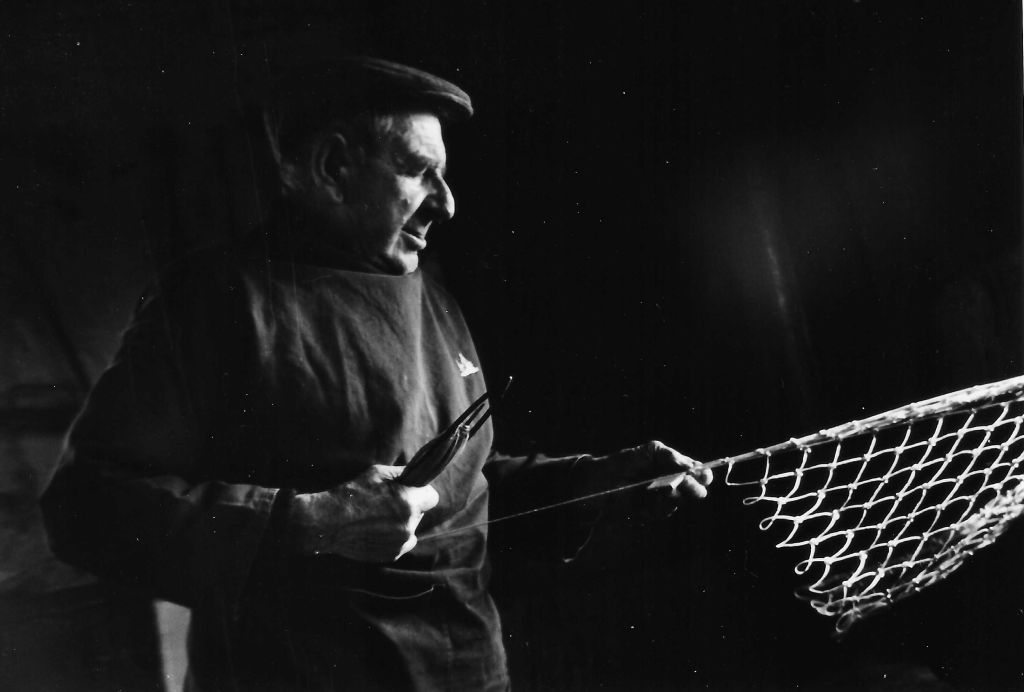
Here is a photo of Charlie Douglas in 1993, taken by the poet Katrina Porteous who wrote the two poems above. What qualities about his character and life are captured in this image?
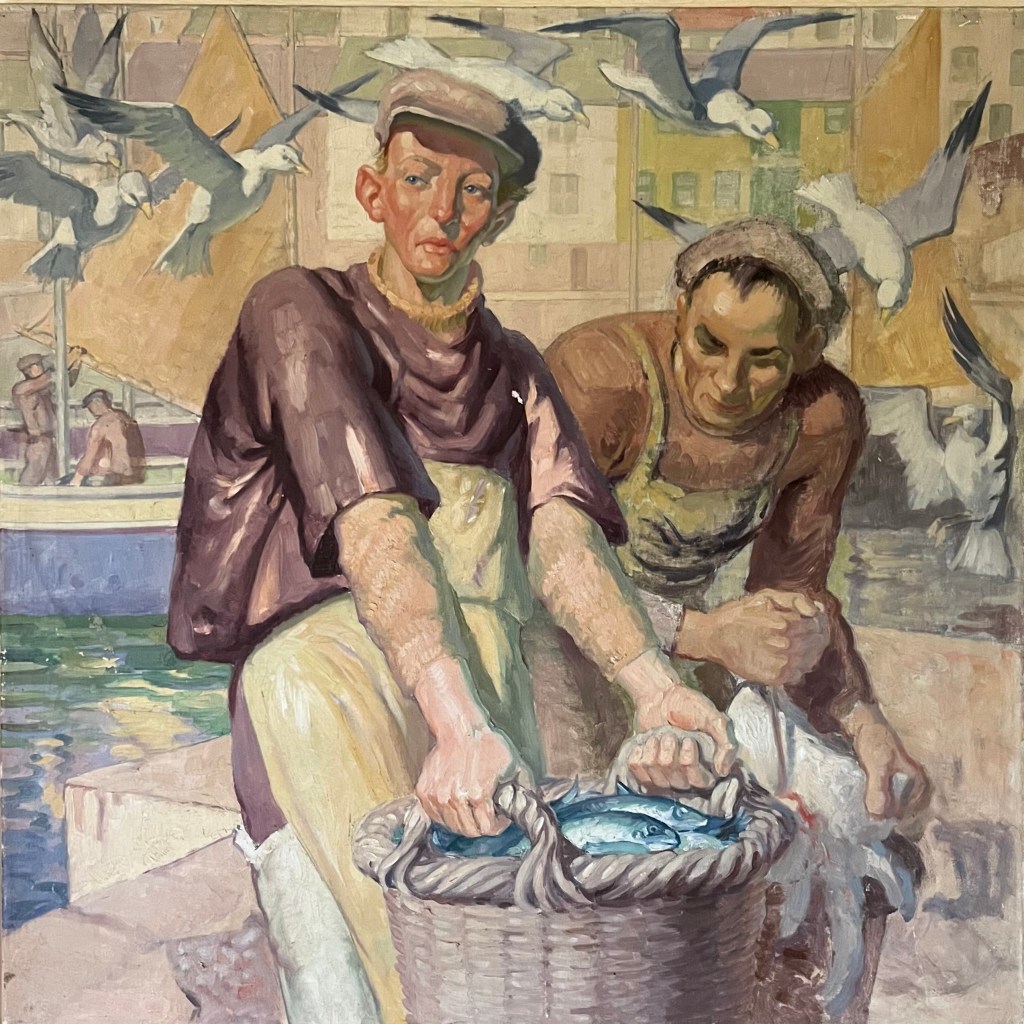
Unknown fishermen from a painting in the mid-20th century. What do you see in these faces or the setting around them? Do you know anyone who does this work or have you had your own experiences of sea fishing that you could describe?
Living near the sea – extracts from poetry by Matthew Hollis as pdf
Matthew has spent a lot of time in North Norfolk and written often about the sea. At our festival in October he will read out and discuss his modern-English translation of ‘The Seafarer’ – an elegy spoken by an unnamed man in exile and alone at sea. How much do you think our relationship with the sea might have changed in a thousand years? Here are some salty-sea extracts from Matthew’s earlier poems:
Here is a poem that has nothing to do with the sea but that shows how you can write about a person’s life by focusing on something else. Mud is by our competition judge, Sir Alan Hollinghurst.
You might also consider
- the grave dangers of the ocean. Sadly, in living memory people from our coast have been lost at sea, where you can never be wholly safe
- the steep decline of fish populations and loss of marine habitat around our coasts due to more and more destructive industrial methods of fishing. This film tells the story of how pressing the issue has become on a global scale
 Literature & Landscape