Tibor Fischer’s short story ‘Crushed Mexican Spiders’ follows a young woman living in Brixton, London, who returns to her flat to find her key no longer works and that someone else is inside living her life. You never find out what is going on, but her sense of displacement is overwhelming, and sometimes it can feel like a lesser version of that when you consider the past – all those people who lived in your house or street or village once, who owned your world and would not recognise you.
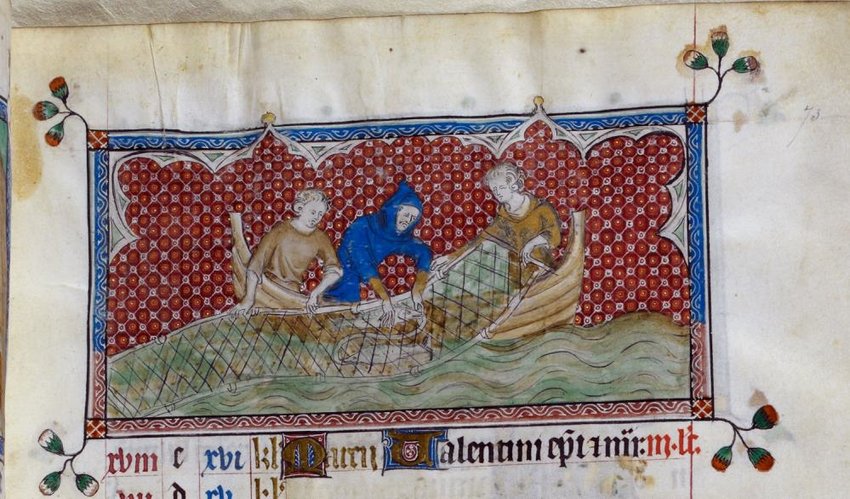
Sometimes when I walk the dog on Barrow Common – a ridge that rises like a rampart behind the sand-filled harbours of North Norfolk – I imagine how terrifying it must have been for people essentially no different from us to look out over their familiar sea view one day at the end of the 8th century and watch the first wave of Viking longships approaching.
The Anglo-Saxons had themselves moved in and driven the local Celts westward following the retreat of Rome four centuries earlier – Branodunum and hundreds of other signs and structures of Roman occupation would still have been standing. Slowly the languages of these invading tribes coalesced into a single form that King Alfred was pleased to call English, and that we call Old English. The reason why we still have any of it now is because of scribes like the ones Alfred commissioned to create his library in Wessex, and thanks to whoever created the Exeter Book by inscribing the best of Old English poetry at the end of the 10th century.
Time doesn’t only separate. Unlike buildings and possessions which can be destroyed and stolen, the best phrases and stories are owned by none and stand the ravages of centuries longer than stone fortresses. They carry forward the soft essential experiences of living – preoccupations, loves and fears of the people who owned and shaped our language before us, walked where we walk, dug Norfolk soil, fished our coast and rivers, put up with British weather.
The Norfolk writer L.P. Hartley’s novel The Go-Between immortalised the peculiar divisiveness of time passing in his ironically immortal opening line: ‘The past is another country’.
I am looking forward to travelling there with Matthew Hollis and Bernard O’Donoghue on Sunday, and with Julia Blackburn on Saturday.

 Literature & Landscape