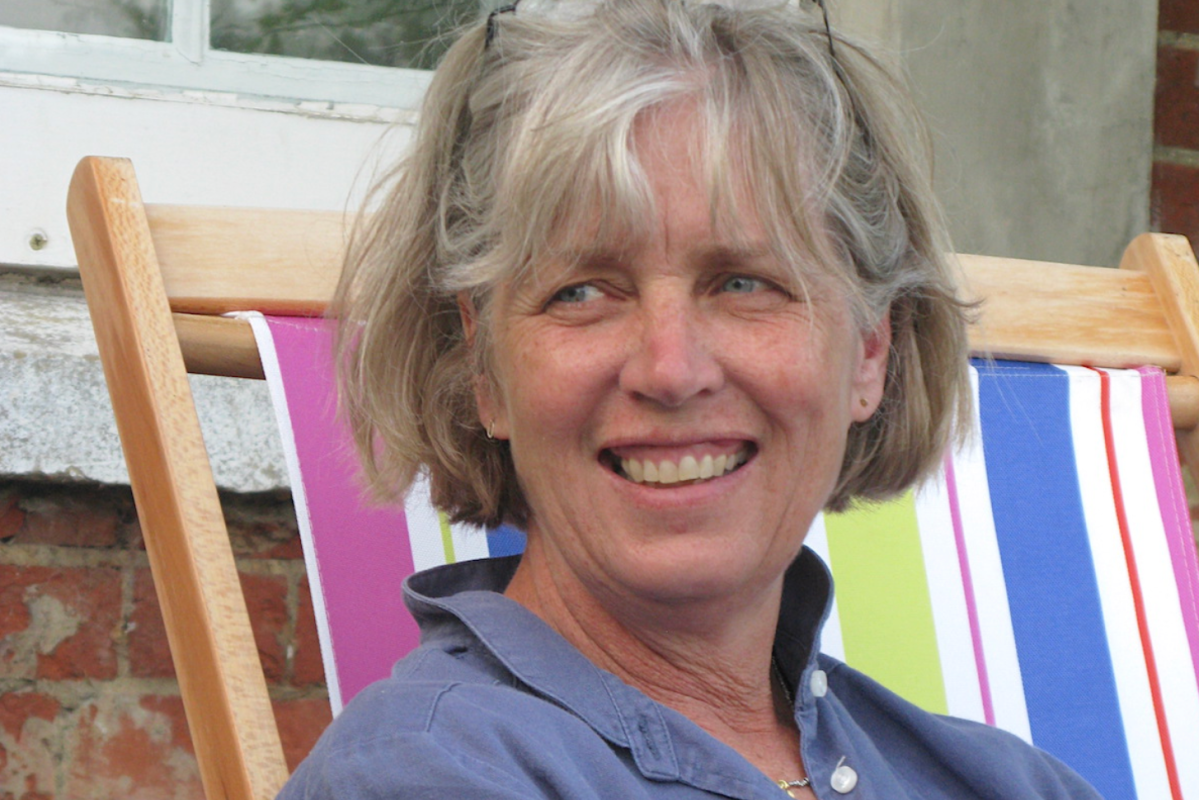
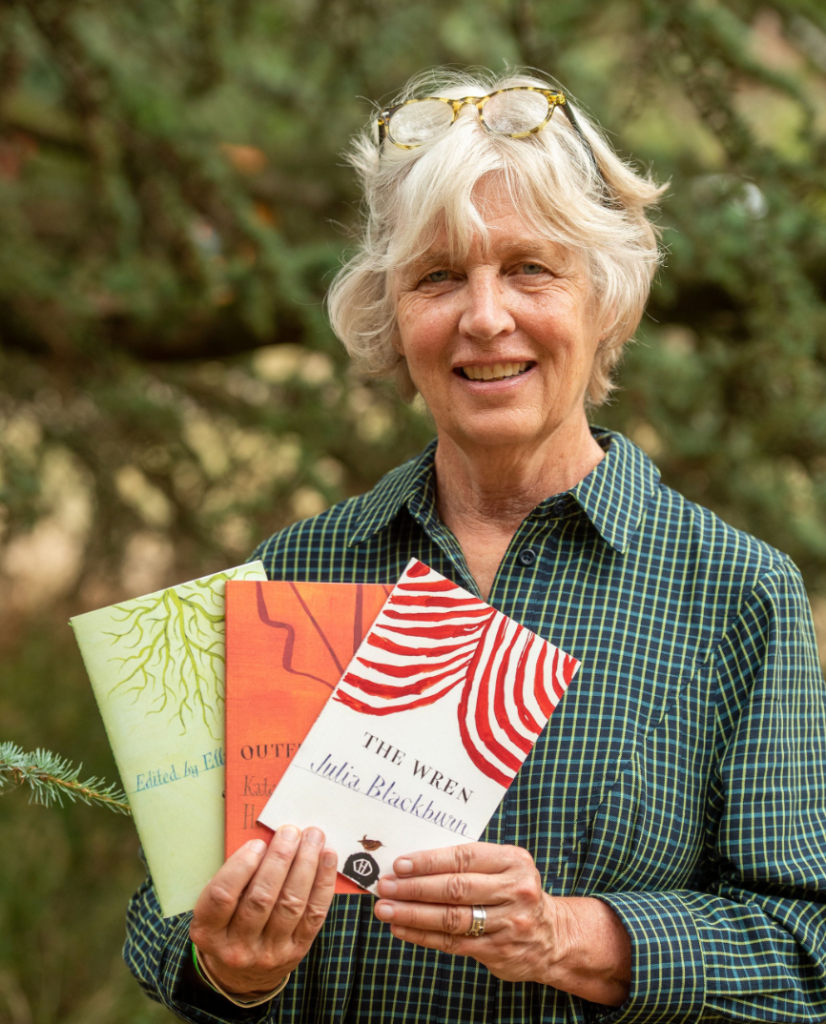
It hardly seems fair that this wonderful woman who encouraged us only a few months ago as we put our first festival together was not around to enjoy it.
We chatted to Daphne at the last event of Sea Fever in May 2003, though she had met Charles at the chalk streams conference in Cambridge. We were all captivated by Matthew Hollis reading from his biography of The Wasteland. It seems ironic looking back that TS Eliot was the focus, given that Eliot came also from that distinguished tribe of anglophile Americans who choose – instead of driving their wagons on west – to turn back east across the ocean, recolonise the place their ancestors left and make extraordinary contributions to British life and culture.
A short while before we met, Daphne’s latest enterprise Hazel Press had published Matthew Hollis’s new collection – Earth House – from which he had also read that weekend, and she was in Wells-next-the-sea to support her star poet. But Daphne already knew our local literary festival. She had had a family place in Brancaster since the early 1970s and used to help Fiona Fraser occasionally when she was director of Poetry-next-the-sea.
Later, when the Suffolk Poetry Trust collapsed in 2016 Daphne had started and run Poetry in Aldeburgh – and filled it, as she explained in her email in January, with ‘simultaneous events, art exhibitions, films, a pop-up cafe, poet artist & social media people in residence, open mic, a schools programme etc. even a small fringe scene developed that included poetry/literary swims which were quite demanding as that festival happens the first week in November.’ She wrote that, ‘it was fun to bring a literary gathering back to life in a new way, somehow we managed to cover travel, accommodation and pay everyone for their events almost completely from ticket sales with a bit of local generosity.’
All that was far beyond what we could achieve on the north coast but Daphne connected us with another of her poets, Jane Lovell, who drove all the way up from Devon to lead an excellent poetry-writing workshop at Literature & Landscape and to read and speak fascinatingly and beautifully about nature with Matt Howard and Mark Cocker. I’m sure that Daphne – farmer, poet, artist, publisher, nature-lover – would have relished that event, and all the others too. That she would certainly have enjoyed the one after Jane’s, when Matthew Hollis interviewed Alice Oswald generously and illuminatingly about her work, and Alice recited to an auditorium completely transfixed by the spell of her words.
I had no idea who I was chatting to back in May 2023, although I was struck by this cool, wry, understated and elegant person with her soft American accent. I think of Hemingway’s iceberg theory in short-story writing – that it’s what hidden beneath the surface that lends the whole its grace and moment.
It wasn’t until first Jane told me of Daphne’s terrible illness and then I found Daphne’s obituary in the summer that finally I got some idea what the rest of the iceberg consisted of – an absolutely extraordinary woman. If you haven’t read it, please have a look. You couldn’t guess:
https://www.thetimes.com/uk/obituaries/article/daphne-warburg-astor-obituary-death-kzzvt6lp3
An amazing person, missed by many, many people not least her family but also weirdly by some of us who barely knew her. What an incredible example of how to grab hold of life. Thank you!

 Literature & Landscape