It seems rather gloomy to describe creativity in medical terms. We’ve been hearing such a lot about mental health for a while now that – on the good side – we hope we now have an environment in which people can feel freer and more confident to open up about their secret struggles without worrying they might expose themselves to judgement and alienation. Sometimes, on the other hand, it can seem disconcertingly as if half the population feels overwhelmed and isolated by their own thoughts, is constantly checking its own state of mind, and sliding downhill.
This where creativity is so transformative. It can be as simple as reading a book – itself a kind of creativity in which your mind gets to work building believable worlds out of lines of letters on a page. Creativity takes you out of yourself by giving you total focus on something else. Your attention is directed intensely outwards – at whatever you’re observing and what you’re creating, channelling your conscious and subconscious via a process which translates the subject into the object. You might be hunting for an image to photograph, composing and timing your shot; scrutinising the soundscape for some essence you can turn into words or music; trying to recreate in designs and earthworks a lost marsh landscape or river; controlling your hands and eyes to steadily apply decorative marks on a sheet of paper – all instead of cycling through thoughts that take you nowhere. Once you’ve finished your work you have a new and separate thing that stands for itself, that you can share. This is hard to beat.
We included two workshops in our programme – one for writing poetry and one for drawing with sticks. John Ruskin said that you never really connect with a place fully until you’ve tried to capture it in lines, words, forms or sounds. When you describe it you see it properly. We think this is an excellent point and we invite fans of landscape to try it.
Last term a teacher at a local school mentioned that many of her pupils love creative writing. Over a school career, as the curriculum gets busier and exams appear on the horizon the space that once existed for inventing poetry disappears. In later life the challenges of managing your responsibilities and keeping yourself and family going make it even harder to find the time to write or paint or even to commit to the potential embarrassment of starting all over again.
Why not consider picking up a stick or a pen on Saturday morning and having a go? It will be a lot of fun, you will almost certainly surprise yourself, and you are very unlikely to regret it.
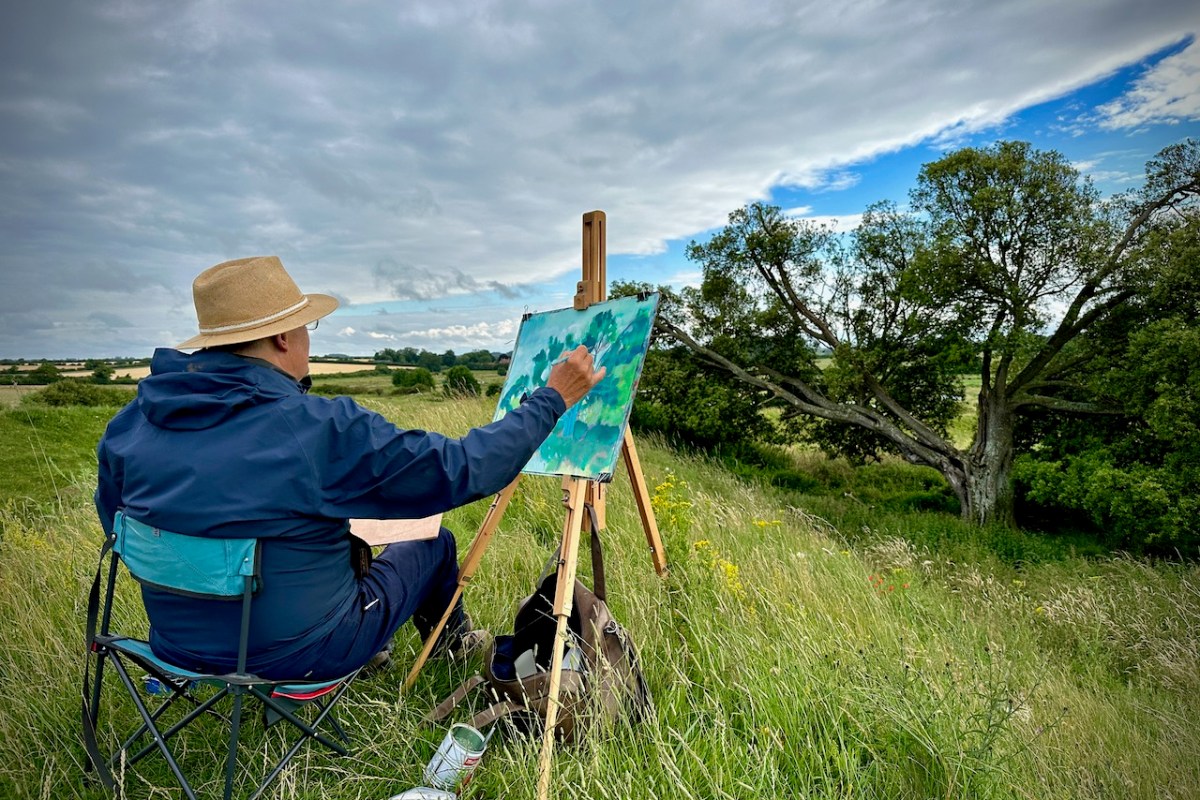
James Cockburn, who will be leading the workshop on drawing with sticks, draws or paints every day. In the blurb for this weekend’s exhibition this is how he summarised his artistic approach: ‘Be positive – life is worth living. See each work as a gift – don’t leave anything out. Bring something new to the party – don’t repeat yourself.’
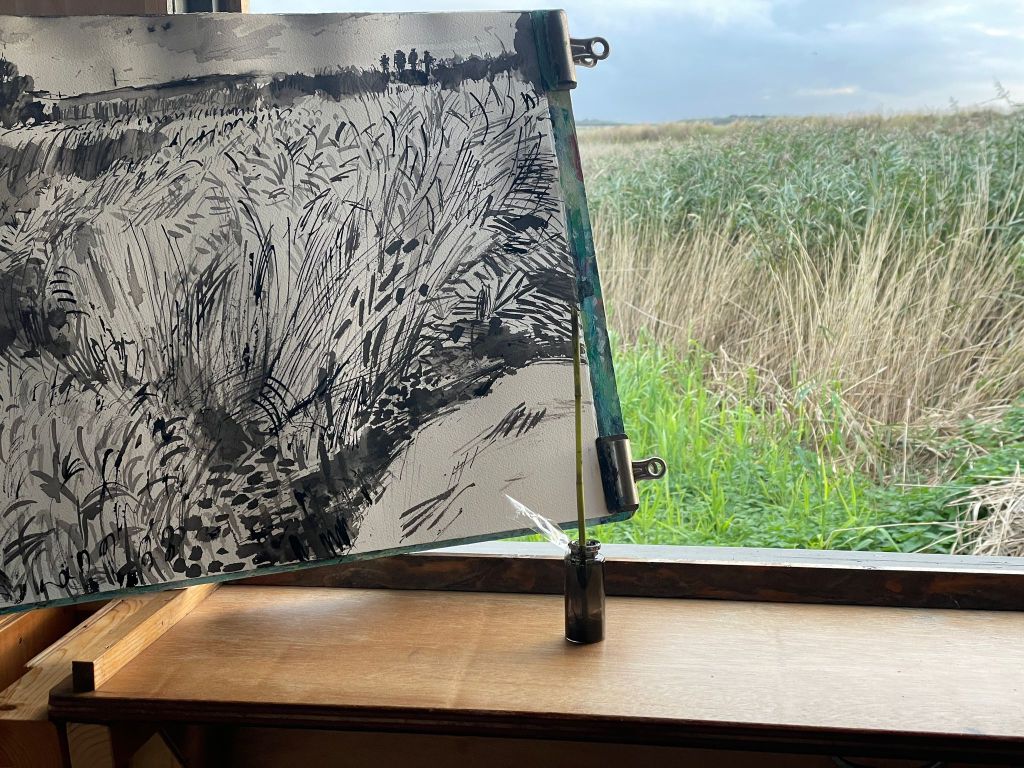
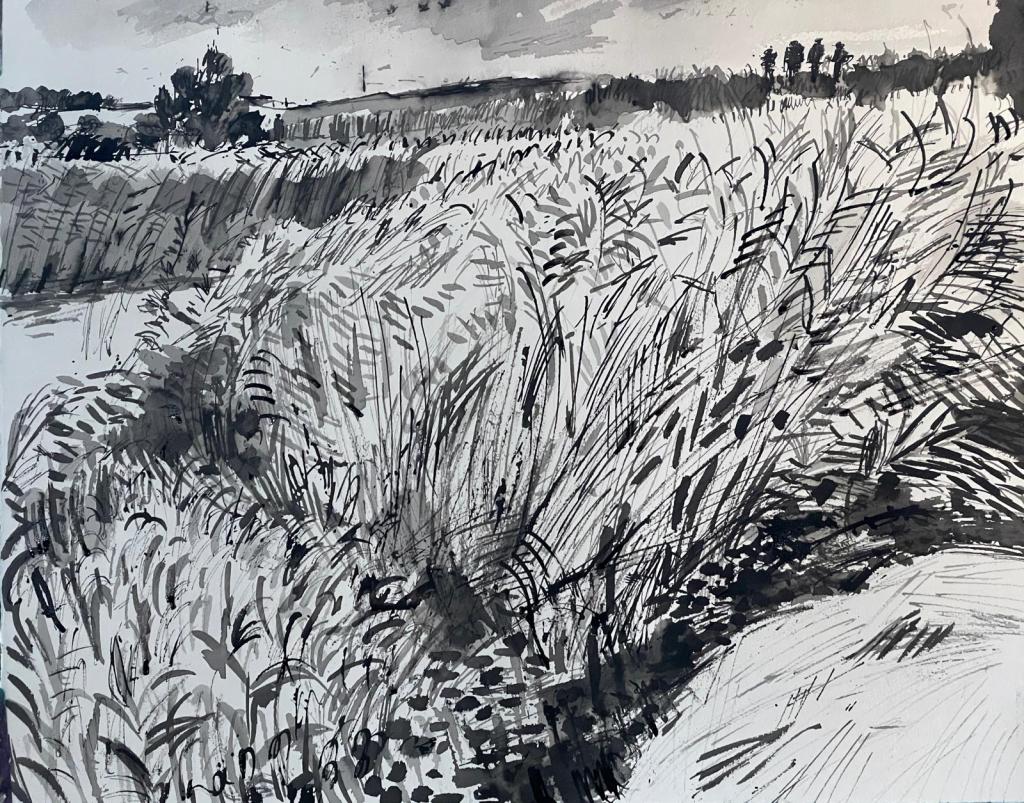
After the rain had stopped this afternoon, James created this picture of the reed beds at RSPB Titchwell seen from the west-end first hide. He used reeds dipped in Indian ink.
 Literature & Landscape