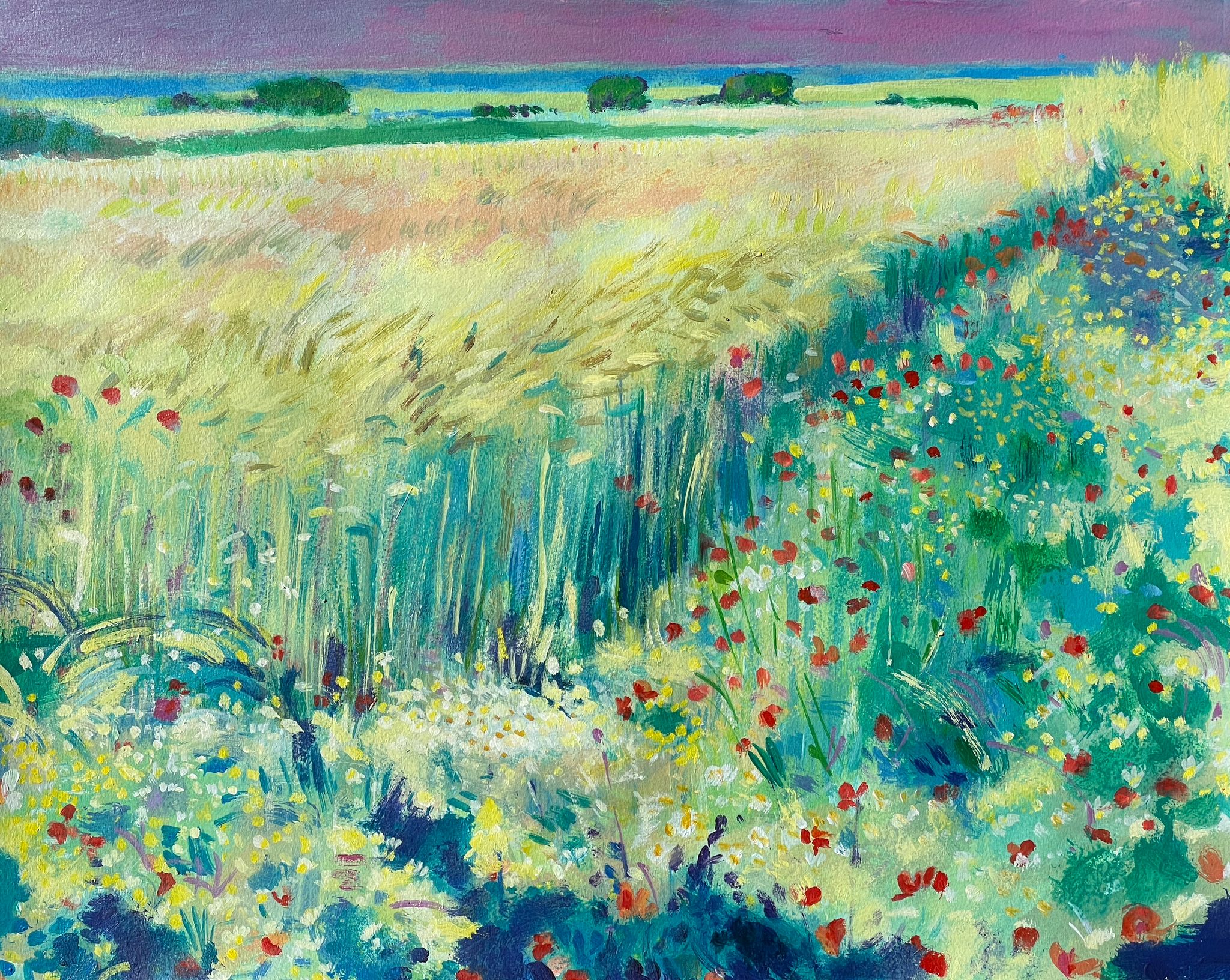
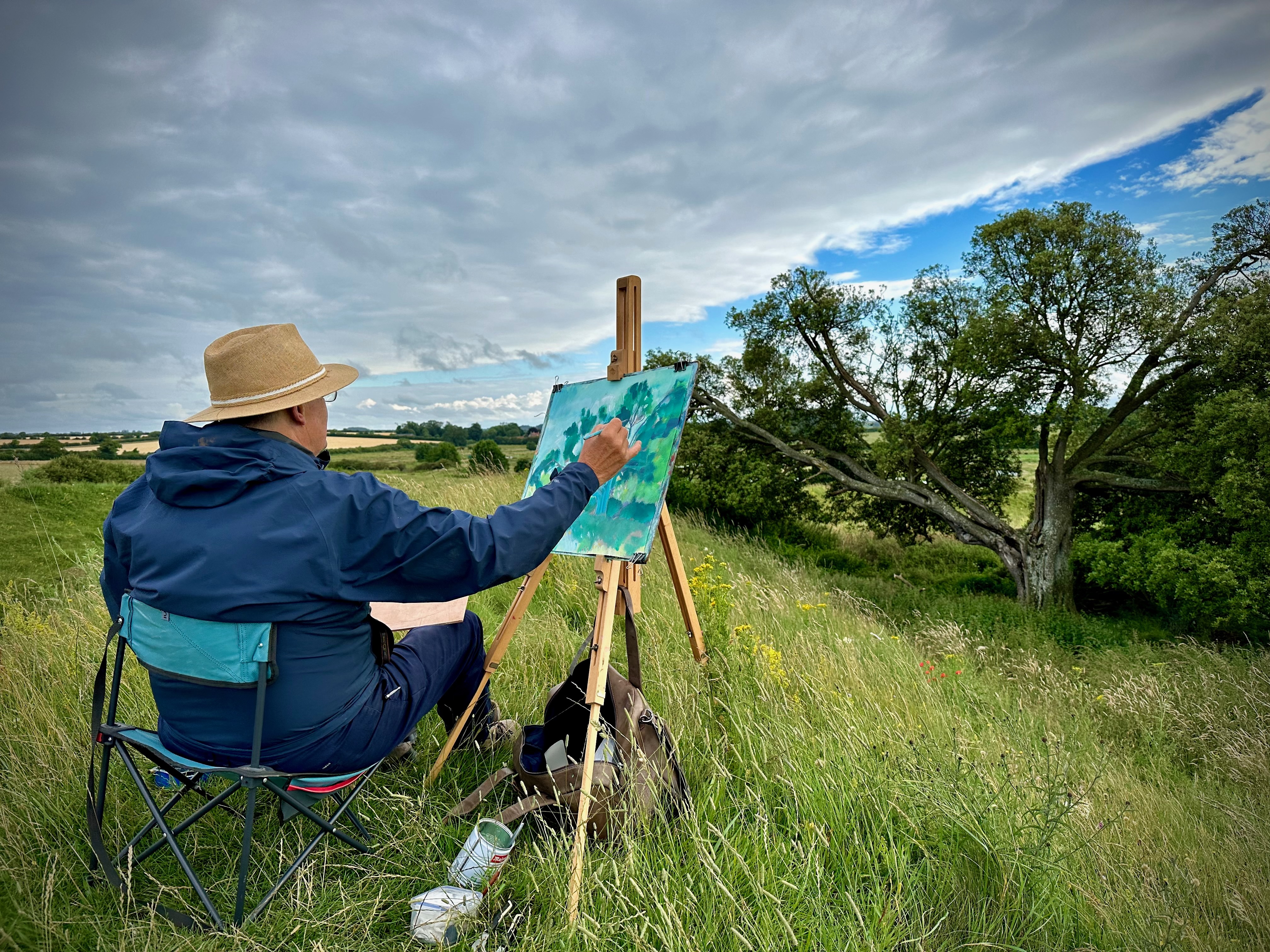
James Cockburn has just texted a cheerful goodbye after his third visit this summer. Two months ago when he arrived it was still raining as it had done all year. James drove round the Holkham Estate with Jake Fiennes and settled on a first view from Great Farm, between Burnham Market and Burnham Deepdale. The sun came out as he began on a painting that looks north towards a distant line of sea under mauve sky. A blonde field curves downhill in soft, ripe, barley fluff above sharp, green stalks beside a broad band of wild field edge dotted with poppies.
The shapes and colours of James’s pine woods at Holme dunes look almost abstract yet at the same time his scene is instantly recognisable to anyone who has lugged buckets and spades over the boardwalk from NWT car park to beach and noticed how peaceful it is under that canopy with a wind whistling through pine needles overhead. Straight dark trunks and jagged branches against a luminous blue; profuse scrubby greens cut by deep angular shadows show where the sand was heaped into lumps by breeze and tide decades before the pines and grasses fixed it in place.
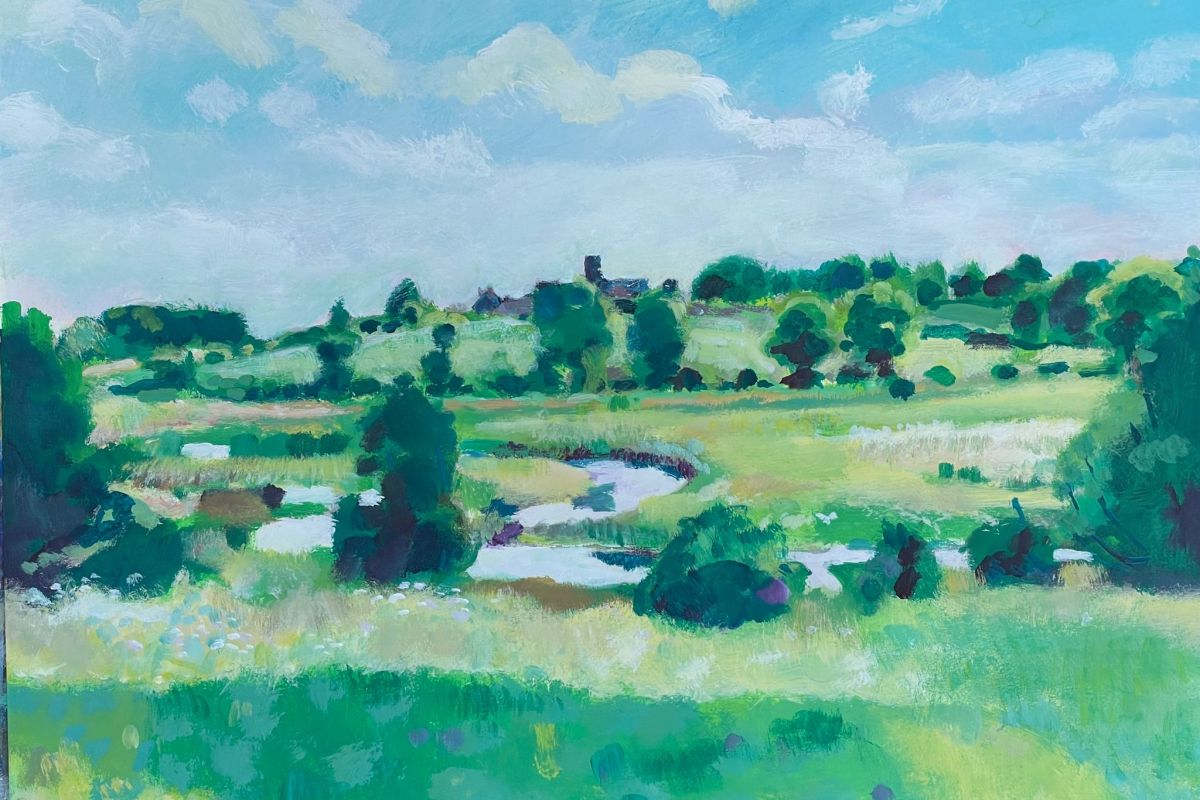
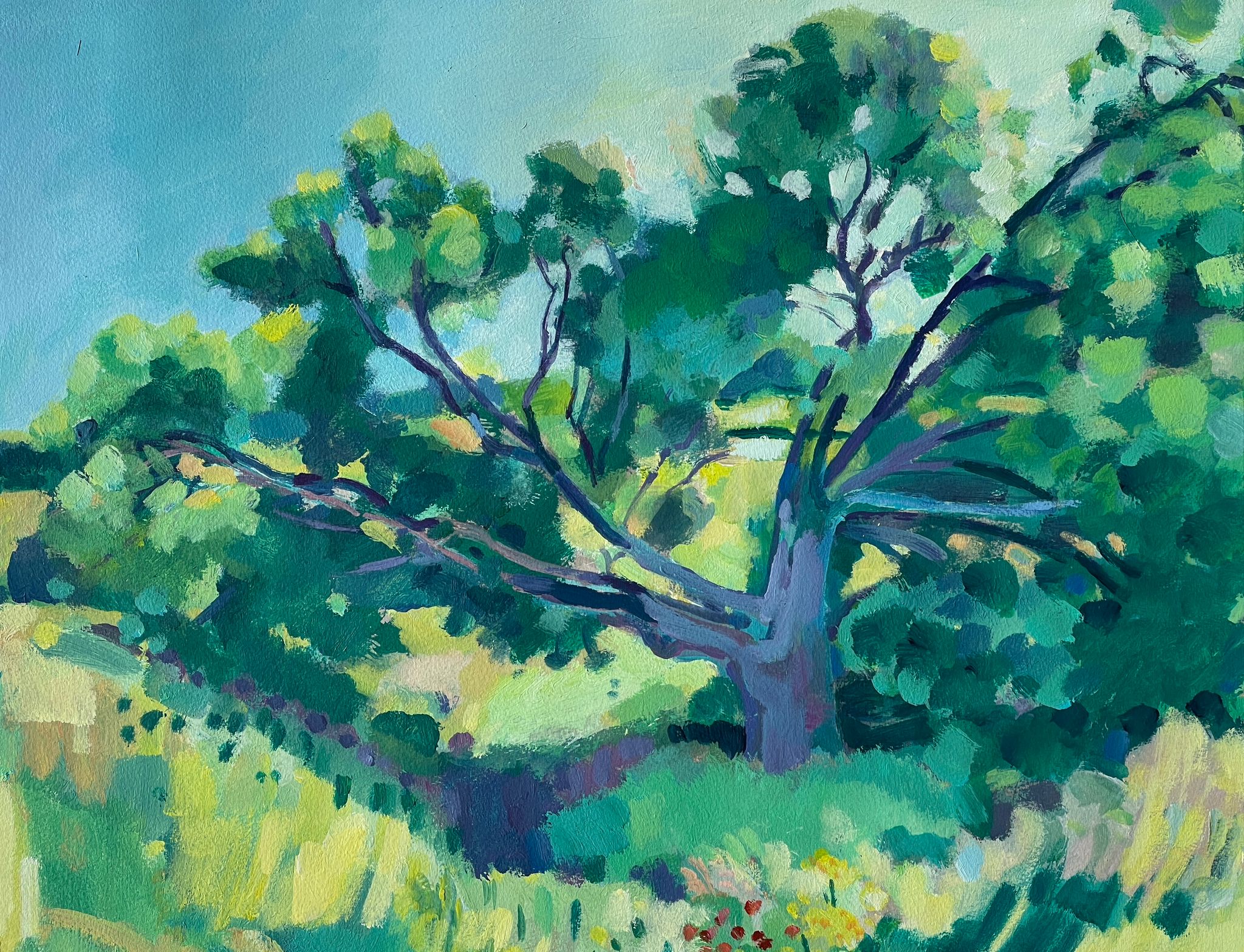
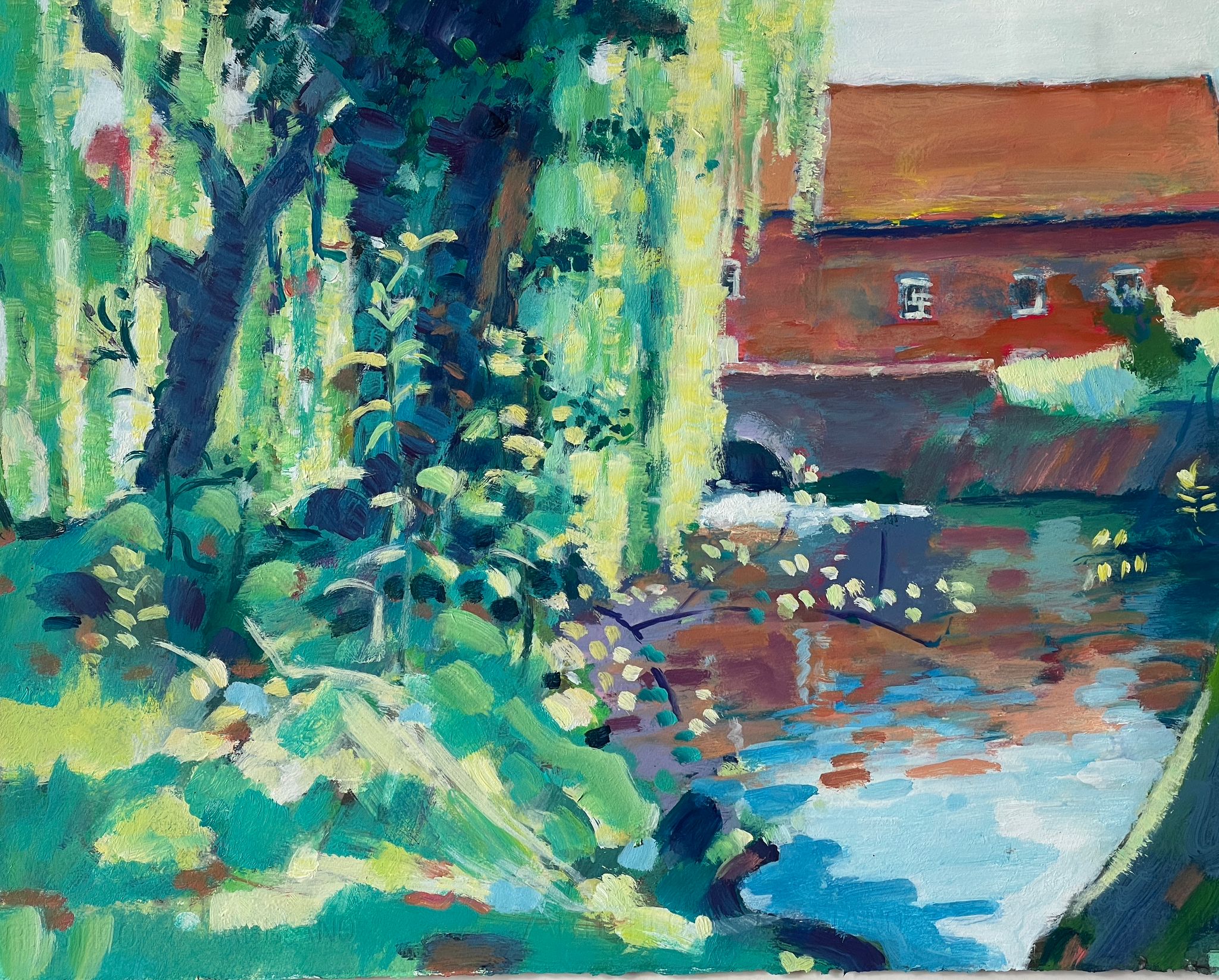
Nine more pictures followed over three visits – all captured out in the field. The re-meandered River Stiffkey under Warham Camp; the ancient Holme oak that grows on its iron-age battlements; the mill at Overy Staithe; the church at Morston; the sluice on the marsh at Thornham Harbour; a hidden ford on the River Glaven which James returned to early one morning after two days of wrestling and distraction, and finally nailed the unique tranquility of the watery space. It takes such skill and such intense observation to be able to evoke moments and places with these easy vibrant sweeps that transport your viewer into a still-unfolding instant.
And yet there is also more than that going on in these paintings.
James immersed himself in reading for this project – books by our festival contributors in particular – from Alice Oswald’s stunning poetry of nature and place to Jake Fiennes’s book Land Healer, which is the story of restoring spaces for nature so that wildlife and ecology can flourish while still at the same time, he argues, we can work to grow healthy food to sustain a growing population. James read and spoke to Mark Cocker too. Our Place, Crow Country, One Midsummer’s Day and A Claxton Diary were all on the table and in the discussion. Mark’s captivating prose, his great knowledge of and curiosity about living things merge together and James was clearly inspired by the mix.
It’s always fascinating to see your place through someone else’s eyes. James lives in Kent, and has lived in Sussex, Berkshire and the Loire Valley. His last visit to Norfolk with a paintbrush was several decades ago, but he has come wielding an artist’s scrupulous gaze, openness and curiosity. Jake commented last week about how by instinct or design James’s painting of the River Stiffkey demonstrates all ages of the history of the landscape.
There is an inextricable link between the care taken to look after this landscape by landowners and conservationists of all stripes for the past century or more and the degree to which that same landscape has inspired people and continues to do so. Conservation and restoration of the landscape feed and inspire art.
If you come to our festival on the 4th, 5th and 6th October you will be able to see James’s North Norfolk paintings on display in Wells Maltings alongside the work of a brilliant printmaker and a celebrated photographer. You may also be able to see and walk around landscape restoration projects which exist only because of a similar combination of scrupulous analytical observation, openness, curiosity and creative vision. These projects are also – in living, three-dimensional, landscape form – art.


 Literature & Landscape